Neighborhood
Journals

Every city has a soul, and it lives in the streets most travelers never find.

A tourist destination is a place you visit. A neighborhood is a place you inhabit, however briefly — somewhere you have a preferred table at the corner café, where the woman at the produce stall begins to recognize your face, where you learn, slowly, the geometry of daily life.

The distinction matters more than it sounds. Most travel writing still orients itself around landmarks and itineraries, around maximizing the number of things seen in the fewest possible days. Neighborhood travel asks the opposite question: what happens when you subtract the agenda? What do you find when you stop moving and simply watch?

Our journals are built around a single, uncommon premise: that the most interesting version of any city is not its museums or its monuments, but its ordinary streets on an ordinary Tuesday. The butcher wrapping paper around a cut of meat. Children spilling out of a school gate at four o'clock. An old man reading on a bench in the afternoon light. These are the textures that shape a place — and they are entirely invisible to anyone passing through.

Spend a week on one block. Learn the rhythm of the morning market, the quiet of the siesta hour, the transformation that happens when the evening cools. Discover the bench where everyone seems to end up, the bar that fills on Fridays, the shortcut that only locals know. This is what slow travel actually looks like — not slower tourism, but a fundamentally different relationship with place.

From the Archive

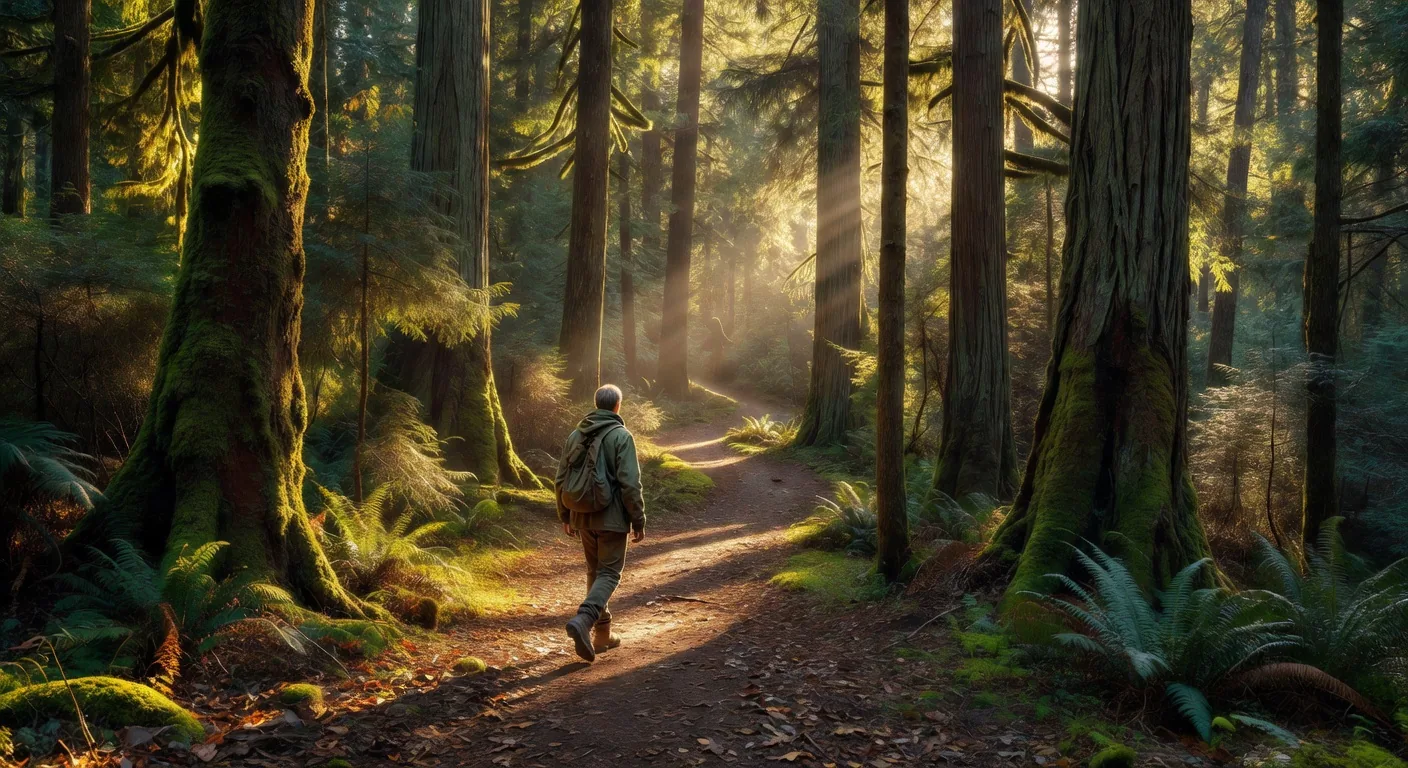
A quiet forest path

What Makes a Neighborhood

01

A Morning Routine

Where locals get their coffee, bread, and newspapers before the city fully wakes. The bakery with the queue at 7am. The kiosk that doubles as a news exchange. The café where the same faces appear every single morning.

02

The Social Anchor

The park, the square, the market — the place that holds the neighborhood's social life together. Where children play and elders sit and strangers become familiar faces. The center of gravity around which daily life orbits.

03

The Hidden Gem

The place only residents know. The courtyard behind the unremarkable door. The rooftop bar without a sign. The restaurant where the menu is never written down. The shortcut through the garden that shaves ten minutes off every walk.

04

The Time of Day

When a neighborhood truly comes alive — not when the tourists arrive, but when the neighborhood itself awakens to its own rhythms. For some it's the blue hour before dawn. For others, it's the long, golden hour after dinner when everyone is finally, properly outside.

How We Write These Journals

Each Resin Melt Line neighborhood journal is the product of at least one full month of living in a single neighborhood. Not visiting — living. Shopping at the local market, riding the local transit, navigating the local bureaucracies and pleasures.

You'll find no curated highlight reels here, no itineraries dressed up as journalism. Our journals are built around what we actually experienced: the disappointments alongside the discoveries, the dull Tuesday afternoons that taught us as much as the extraordinary Saturday nights. We write about neighborhoods the way a thoughtful local might describe their own street — with affection, precision, and a complete lack of the performative enthusiasm that characterizes so much travel writing.

Each journal combines three distinct registers: the sensory and atmospheric (what does this neighborhood feel like, smell like, sound like?), the practical and logistical (where to live, how to get around, what things actually cost), and the deeply personal (our own encounters, conversations, and failures of understanding). We also include seasonal notes, because a neighborhood in August and a neighborhood in January are, in many cities, almost entirely different places.

Sensory Writing

Atmospheric prose that conveys the feeling of being in a place, not just its facts.

Practical Information

Real rents, real transport costs, real recommendations — updated regularly.

Personal Reflection

What it actually felt like to live there. The doubts, the surprises, the slow adjustments.

Local Map

Annotated maps marking our personally vetted spots — not sponsored, never generic.

Seasonal Notes

How the neighborhood changes across the year, and when to come for what.

Long-Stay Advice

The things you only learn after a month: bureaucratic tips, cultural nuances, hidden costs.

Have you spent an extended time in a neighborhood you love? We accept submissions from slow travelers who can meet our editorial standards. We're looking for depth, honesty, and the kind of specificity that only comes from actually being there.
Coming Soon

We're currently embedded in three new neighborhoods. Subscribe below to be notified when each journal goes live.

Coming Soon

Cihangir

Istanbul, Turkey

The bohemian hillside neighborhood above Taksim, where artists and writers have gathered for decades. Steep cobblestone streets, antique shops, extraordinary mezze, and the best views of the Bosphorus from any residential window in the city.

Coming Soon

Mitte

Berlin, Germany

Not the generic Mitte of guidebooks, but the specific micro-neighborhoods within it — the area around Hackescher Markt, the quiet courtyards of the Spandauer Vorstadt, the galleries and the brutalist remnants existing in impossible adjacency.

Coming Soon

Kalighat

Kolkata, India

One of Kolkata's oldest and most storied neighborhoods, home to the Kalighat temple, an extraordinary tradition of folk painting, and a street food culture of almost bewildering density and quality. South Kolkata at its most layered.